
Contents
- What is black cumin oil?
- Are black cumin oil and black seed oil the same thing?
- What makes black cumin oil special?
- The benefits of black cumin oil for the skin
- What is the scent and texture of black cumin oil?
- Benefits of black cumin oil for hair
- Why is thymoquinone considered the key compound in black cumin oil?
- How should black cumin oil be used?
- Who is black cumin oil best suited for?
- Possible side effects and precautions
- Conclusion
- Frequently Asked Questions
- Scientific sources
Black cumin oil, also known as black seed oil or Nigella sativa oil, has been used for centuries in traditional beauty and skincare rituals. Today, it is once again gaining attention for its benefits for the skin and hair, as well as its high content of antioxidants, fatty acids, and plant compounds, particularly thymoquinone.
In skincare products, black cumin oil is most often used to address dryness, tightness, and dull hair. Thanks to its high lipid content, it helps make the skin feel more comfortable to the touch and the hair look softer and more well-groomed.
Unlike very light oils, black cumin oil has a richer texture and a distinctive spicy, slightly earthy aroma that many people notice right from the first use. Because of its high concentration, just a few drops are usually enough.
Black cumin oil combines a long history of use with renewed interest from cosmetics manufacturers, who incorporate it into their skin and hair care formulas.
In this article, we’ll explore the main benefits of black cumin oil for skin and hair, how to use it properly, who it’s best suited for, and what you can realistically expect from regular use.
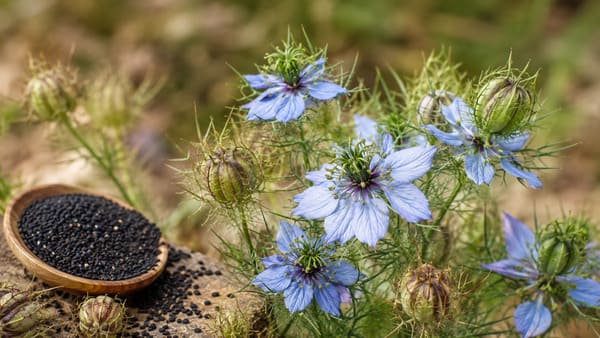
What is black cumin oil?
Black cumin oil is extracted from the seeds of Nigella sativa, a flowering plant native to Asia, the Middle East, and Eastern Europe. It has been used in various cultures for centuries as part of traditional care and herbal wellness practices.
Depending on the region, it may also be called:
- Black seed oil.
- Black cumin oil.
- Nigella sativa oil.
- Black jeera oil.
Despite the different names, it is usually the same oil derived from the seeds of Nigella sativa.
Cold-pressed oil is most often recommended, as this method helps preserve fatty acids, antioxidants, and delicate plant compounds.
Compared to thick oils, such as castor oil, black cumin oil spreads more easily over the skin and hair. At the same time, it is noticeably richer than very light oils such as grape seed or rosehip oil, so a small amount is usually sufficient for oily skin.
One reason for this oil’s popularity is its versatility. It is nourishing enough for dry skin and damaged hair, yet it doesn’t leave a heavy feeling like some thick plant-based oils do.
Are black cumin oil and black seed oil the same thing?
In most cases, yes. In the cosmetic, pharmaceutical, and wellness contexts, the terms “black seed oil,” “black cumin oil,” and “oil of black cumin” usually refer to the same oil, which is extracted from the seeds of the Nigella sativa plant.
This plant is the classic source of what is known as “black cumin” in international cosmetic and scientific practice. Its oil is valued for its content of fatty acids, antioxidants, and bioactive compounds, particularly thymoquinone.
It is important to understand that the term “black cumin” can have different meanings across languages and traditions. For example, it is sometimes confused with common caraway (Carum carvi) or other herbs that have nothing to do with Nigella sativa.
That is precisely why, in professional cosmetics and when selecting raw materials, the key reference point is always the botanical name, not the marketing name:
Nigella Sativa Seed Oil (INCI)
If this name appears in the product’s ingredients list, it is guaranteed to be black cumin oil.
In cosmetics, it is often used in skin and hair care products because of its emollient, soothing, and antioxidant properties.

What makes black cumin oil special?
The popularity of black cumin oil stems not only from its long history of use but also from its composition. For cosmetologists and formulators, it is of interest due to its combination of fatty acids, antioxidants, and bioactive plant compounds that work in multiple ways.
It naturally contains:
- Thymochinone.
- Antioxidants.
- Fatty acids.
- Linoleic acid.
- Phytosterols.
- Other plant compounds.
Thymochinone is one of the most extensively studied active compounds in Nigella sativa. It is this compound that is often associated with the antioxidant and soothing properties of this oil.
In addition, the oil contains a significant amount of linoleic acid—one of the key fatty acids for maintaining the integrity of the skin barrier. It is precisely an adequate amount of these lipids that helps the skin retain moisture more effectively and remain less sensitive to external irritants.
What to consider when choosing black cumin oil
In cosmetic applications, the quality of black cumin oil can vary significantly depending on how the raw material is extracted. Cold-pressed oil is considered the most valuable, as it preserves the natural complex of fatty acids and bioactive compounds. It is also important to pay attention to the color, aroma, and storage conditions: high-quality oil has a characteristic spicy scent and requires protection from light and overheating.

The Benefits of Black Cumin Oil for the Skin
Black cumin oil has become popular in natural skincare thanks to its moisturizing and antioxidant properties. Although research is still ongoing, many people use it to help keep their skin softer, smoother, and more comfortable to the touch. Another reason for this oil’s popularity is that it often provides a nourishing sensation without leaving an overly heavy or sticky finish.
May help skin prone to breakouts
One reason black cumin oil is often found in products for problem skin is its combination of linoleic acid and antioxidant compounds. That is why it is frequently included in the formulas of oil serums and balancing skincare products.
Thanks to its fatty acids and antioxidant compounds, the oil helps maintain the skin’s moisture balance and protective barrier. Unlike harsh products that dry out the skin, black cumin oil often leaves the skin feeling more comfortable and soft.
For oily or combination skin, the application method is crucial. Many people add just 1–2 drops to their cream or serum, rather than applying the oil as a separate, thick layer.
Many people also find that the oil spreads more easily on slightly damp skin after washing their face. Because of its richer texture, some people prefer to use it in the evening, especially during the warmer months.
Helps soften dry and tight skin
Black cumin oil is particularly popular among people with dry or dehydrated skin.
The fatty acids in it can help maintain the skin’s natural protective barrier and reduce moisture loss. As a result, the skin often becomes softer, smoother, and more comfortable.
In practice, many users note that after cleansing, their skin stays comfortable for longer and does not require immediate application of additional moisturizers.
Because of its rich texture, just a few drops are usually enough. Using too much can leave a heavy finish, especially on combination skin.
Contains antioxidants to help maintain healthy-looking skin
The environment, dry air, sun, and pollution can gradually affect the appearance of your skin.
The antioxidants in the oil help protect the skin from oxidative stress—one of the factors that gradually contributes to dullness and a loss of the skin’s fresh appearance.
That is why it is often added to: nighttime facial oils, botanical serums, antioxidant skincare products, and products designed to support the skin barrier.
With regular use, many people notice that their skin looks smoother and less dull.
Helps maintain hydration and support the skin barrier
The condition of the skin barrier directly affects the skin’s moisture levels and comfort.
Black cumin oil contains lipids and fatty acids that can help reduce moisture loss and keep the skin soft.
That is why it is often used after cleansing, as part of an evening skincare routine, during the cold season, and in combination with creams and lotions.
People with very dry skin sometimes leave the oil on overnight, whereas those with oily skin usually find it more comfortable to use a smaller amount.
What is the smell and texture of black cumin oil?
This is rarely mentioned in articles, but black cumin oil has a very distinctive aroma.
It is often described as: spicy, earthy, grassy, and slightly peppery.
Some people like this scent right away, while others find it too strong at first.
The oil has a medium-rich texture. It spreads easily over the skin, but if applied in excess, it can feel heavy, especially on oily skin.
That is why many people use it mainly in the evening or mix it with a cream or lighter oils.

The Benefits of Black Cumin Oil for Hair
In addition to skincare, black cumin oil is widely used in hair and scalp care.
It is often added to:
- Hair masks.
- Oils for the scalp.
- Air conditioners.
- Botanical serums.
- Products for dry hair.
When it comes to hair care, black cumin oil is often more versatile than very thick vegetable oils. It spreads more easily along the length of the hair and is easier to wash out after hair masks and oil treatments.
Helps keep the scalp feeling comfortable
A healthy scalp is essential for well-groomed hair.
Black cumin oil contains fatty acids that may help reduce dryness and discomfort on the scalp.
Many people use it as a massage oil before shampooing and find that their scalp feels less dry and tight afterward.
The difference is most noticeable during the cold season or after using shampoos that dry out the scalp.
However, because of its rich texture, using it too often can cause oil to build up on the scalp and hair. For most people, using it 1–2 times a week is sufficient.
People with very fine hair are usually better off applying oil only to the ends or using just a small amount.
May help with dry and brittle hair
Dry hair often looks dull, coarse, and more prone to breakage.
Black cumin oil can help soften hair and make it smoother thanks to the nourishing oils it contains.
It is often used:
- As a pre-shampoo treatment.
- In hair masks.
- For dry ends.
- When used in combination with conditioner.
A small amount is best for fine hair, while thick, curly, or textured hair generally responds better to richer oils.
Traditionally used to promote hair growth
Black cumin oil has long been used in traditional hair care.
Although research on hair growth is still limited, many people incorporate it into their regular skincare routine to:
- Nourishment for the scalp.
- Reduced dryness.
- Helps promote healthier-looking hair.
- Improved hair texture.
It is often combined with rosemary oil, peppermint oil, or castor oil.
At the same time, it is important to have realistic expectations about the benefits of any cosmetic oil. At present, black cumin oil should be viewed primarily as a supportive component of scalp and hair care, rather than as a standalone solution for stimulating hair growth.
Helps make hair softer and shinier
Hair that lacks moisture often looks dull and less smooth.
Black cumin oil can help make hair softer and appear shinier by coating it with a thin, nourishing layer.
Many people apply 1–2 drops to dry ends after styling or use the oil in overnight treatments before washing their hair.
More often than not, the first thing users notice isn’t a “dramatic change,” but softer, smoother hair.
Why is thymoquinone considered the key compound in black cumin oil?
One of the most extensively studied compounds in black cumin oil is thymoquinone.
Thymoquinone is considered one of the key bioactive components of Nigella sativa. Most scientific publications on this plant analyze its properties and potential effects on the skin and hair in one way or another. Antioxidants help protect against external factors associated with dryness, dullness, and oxidative stress.
This is one of the reasons why black cumin oil is often added to products designed for:
- Dry skin.
- Support for the skin barrier.
- Scalp care.
- Dull or dry hair.
Cold-pressed oil is most often recommended because it helps preserve delicate plant compounds more effectively.

How should black cumin oil be used?
Black cumin oil can be used for both skincare and hair care. Due to its high concentration, it’s best to start with a small amount.
For the skin
Many people add a few drops to their moisturizer or apply the oil to dry patches of skin.
It is often used in evening skincare routines, facial oils, for dry areas, in massage blends, and in body oils.
For oily skin, it’s usually best to use as little as possible.
For hair
The oil can be used: as a massage oil for the scalp, before washing your hair, in hair masks, and for dry ends.
Many people leave it on for 20–30 minutes before washing, and for very dry hair, they sometimes use overnight treatments.
Because of its strong scent, it is often blended with argan, jojoba, or rosemary oil.
Why is it important to do a patch test?
Even natural oils can cause irritation or sensitivity.
Before regular use, it is recommended that you test the oil on a small area of skin and wait 24 hours.
This is especially important for people with sensitive or reactive skin.
Who benefits most from black cumin oil?
Black cumin oil is often recommended for people with:
- Dry or dehydrated skin.
- Dry scalp.
- Mature skin.
- Brittle hair.
- Curly or textured hair.
For very oily skin or very fine hair, using just a small amount of oil is usually more comfortable.

Possible side effects and precautions
Black cumin oil is typically used in small amounts, but some people may experience irritation, redness, dryness, itching, or sensitivity.
To reduce the risk of irritation:
- Don’t use too much oil.
- If necessary, mix it with other products.
- Do not apply to broken skin.
- Stop using if you experience discomfort.
It’s also a good idea to choose high-quality cold-pressed oil from trusted manufacturers.
Conclusion
Black cumin oil continues to gain popularity in natural skincare thanks to its combination of antioxidants, fatty acids, and nourishing plant compounds.
Many people use it for:
- Helps keep skin hydrated.
- Softening dry skin.
- Nourishment for the scalp.
- Improves hair softness.
- Maintains hair shine and texture.
Like most plant-based oils, black cumin oil does not provide instant cosmetic results. Its strength lies in its ability to gradually support the skin barrier, soften the skin, and improve the texture of the hair with regular use.
Frequently Asked Questions
For example, black cumin oil contains antioxidants and fatty acids that can help keep the skin hydrated and comfortable.
It depends on your skin type and how much product you use. Because of its rich texture, a few drops are usually enough for people with oily skin.
Yes, many people use it in their skincare routine. It’s best to start with a small amount and do a patch test.
It is often used to maintain scalp moisture, soften hair, reduce dryness, and enhance shine.
The oil has a distinctive spicy, herbaceous, and slightly peppery aroma, which some people may find quite intense.
Most people use it 1–2 times a week as a mask or scalp oil.
Most often, the first noticeable changes are softer hair or a more comfortable feeling on the skin. Noticeable long-term changes usually require regular use.
Yes, many people use it overnight for dry skin or hair. However, a small amount of oil usually works better.
It depends on your needs. Castor oil is much thicker and heavier, while black cumin oil usually spreads more easily over the skin and hair.
Academic sources
- Sawarkar SP, Verma H. Nigella sativa seed, a novel beauty care ingredient: A Review.
- Ahmad A, Husain A, et al. A review of the therapeutic potential of Nigella sativa.
- Salehi B, Quispe C, et al. Nigella Plants – Traditional Uses, Bioactive Phytoconstituents, Preclinical and Clinical Studies.
- Rossi A, Priolo L, et al. Evaluation of a Therapeutic Alternative for Telogen Effluvium: A Pilot Study.
Comments (0)